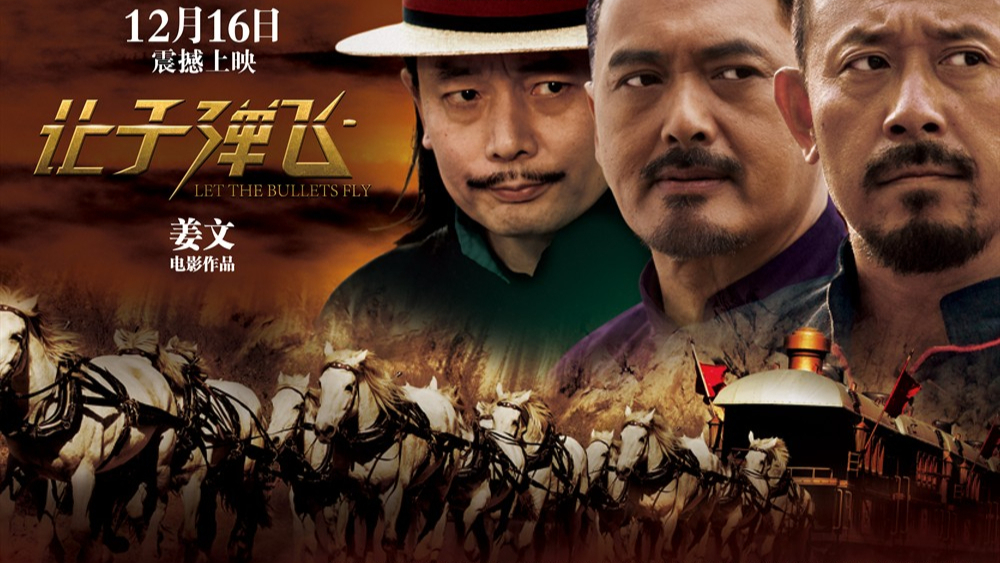
Let the Bullets Fly
Introduction
Let the Bullets Fly is a Chinese action comedy film released on December 16, 2010. Directed by Jiang Wen, the film stars an ensemble cast including Jiang Wen himself, Ge You, and Chow Yun-fat. The film is known for its unique blend of action, comedy, and drama, and has been well-received by audiences and critics alike. It is the first installment in a loose trilogy, followed by Gone with the Bullets in 2014 and Hidden Man in 2018. Let the Bullets Fly was a commercial success, grossing approximately $140 million at the box office. The film is set in the early 20th century in China and explores themes of power, corruption, and justice, wrapped in a satirical narrative.
Plot
The plot of Let the Bullets Fly revolves around a notorious bandit named Zhang, played by Jiang Wen, who assumes the identity of a governor in a small town called Goose Town. His plan is to exploit the town, but he soon finds himself locked in a battle of wits with the local tyrant, Master Huang, portrayed by Chow Yun-fat. As Zhang attempts to outsmart Huang and secure his control over the town, he is also faced with the challenge of maintaining his own integrity and sense of justice amidst the chaos and corruption. The narrative is punctuated by a series of clever schemes, shootouts, and comedic moments that drive the story forward. Ultimately, Let the Bullets Fly is a tale of deception, power struggles, and unpredictable alliances, culminating in a dramatic and unexpected climax.
Production
Let the Bullets Fly was produced with a blend of traditional and modern filmmaking techniques, resulting in a visually striking and engaging cinematic experience. The film is set in the early 20th century, and the production team went to great lengths to recreate the period accurately, using intricate set designs and authentic costumes that reflect the era. Filming took place in various locations across China, with some scenes shot in Kaiping, known for its iconic diaolou or multistory defensive village houses. Jiang Wen, known for his meticulous attention to detail, collaborated closely with his creative team to ensure that every aspect of the production contributed to the film's authenticity and narrative impact. The film's action sequences are particularly notable, featuring a combination of practical effects and choreographed stunts that add to the film's excitement and appeal.
Awards and Nominations
Let the Bullets Fly received numerous awards and nominations, recognizing its achievements in filmmaking and storytelling. The film was nominated for several prestigious awards in China, including the Golden Horse Awards and the Asian Film Awards. It won accolades for its screenplay, direction, and performances. Jiang Wen's work as a director was particularly praised, earning him recognition for his innovative approach to blending genres and his ability to craft compelling narratives. The film's success at award ceremonies further cemented its status as a critical and commercial triumph and contributed to its enduring popularity in the years following its release.
Cultural Impact
The film is credited with revitalizing interest in Chinese action comedies and set a new standard for the genre with its clever storytelling and high production values. It also sparked discussions on social and political themes depicted in the film, such as corruption, power dynamics, and justice, resonating with audiences both in China and abroad. Additionally, the film's success paved the way for the release of its sequels, continuing its legacy and influence in the industry.
The film surprisingly gave a significant boost to tourism at Kaiping Diaolou. Its widespread popularity quickly catapulted the already World Heritage-listed Kaiping Diaolou and Villages into the limelight, transforming it into a sought-after tourist hotspot. Renowned for its fusion of Chinese and Western architectural styles and deep historical and cultural significance, Kaiping Diaolou captivated the interest of numerous visitors.








